
In 2008, I wrote that time management was really attention management. I was thinking about Getting Things Done, RSS feeds, and the growing number of things competing for a person's focus. That version of the problem feels almost quaint now (although I'm sure I found it very stressful at the time).
Agents have brought me back to the same problem from the other direction. Features that used to take days can come back in hours, often several at once: branches to compare, questions to answer and decisions to make. Pretty quickly I became the scheduler, the router, the memory layer and the review queue. I could do more as long as I also supervised more conversations.
I built Voxelbox, a local system for keeping agent work moving across my projects, because I couldn't scale my attention by opening more interactive sessions. I kept finding work that didn't need another conversation. It needed to happen again at the right time, with enough context to begin and a clear boundary around what could happen without me. If I had to remember to start the session, reconstruct the history, and watch every step, I had delegated the task without giving up much of the attention.
An agent should be able to carry an ongoing responsibility, with enough context and authority to keep routine work moving and a clear point where the decision comes back to me.
Operating a side project
DynastyDB is the clearest example because it sits at the small end of the problem. I started building it in 2007 to run a handful of complicated fantasy football leagues. It is a true side project. It cannot justify a staff, but it still has to be operated.
The code is only part of that work. Rankings have to be prepared and published. League data needs to stay current. Commissioner workflows still have to run, and questions in the forum need an answer. None of those tasks is especially valuable on its own. Together, they are the difference between a site that exists and one that remains useful.
For DynastyDB, agents can read league state, prepare rankings and use the same administrative tools I use for routine operations. They bring an ambiguous ruling back to me. I can review the result through the same product surfaces I already use instead of reconstructing it from an agent transcript.
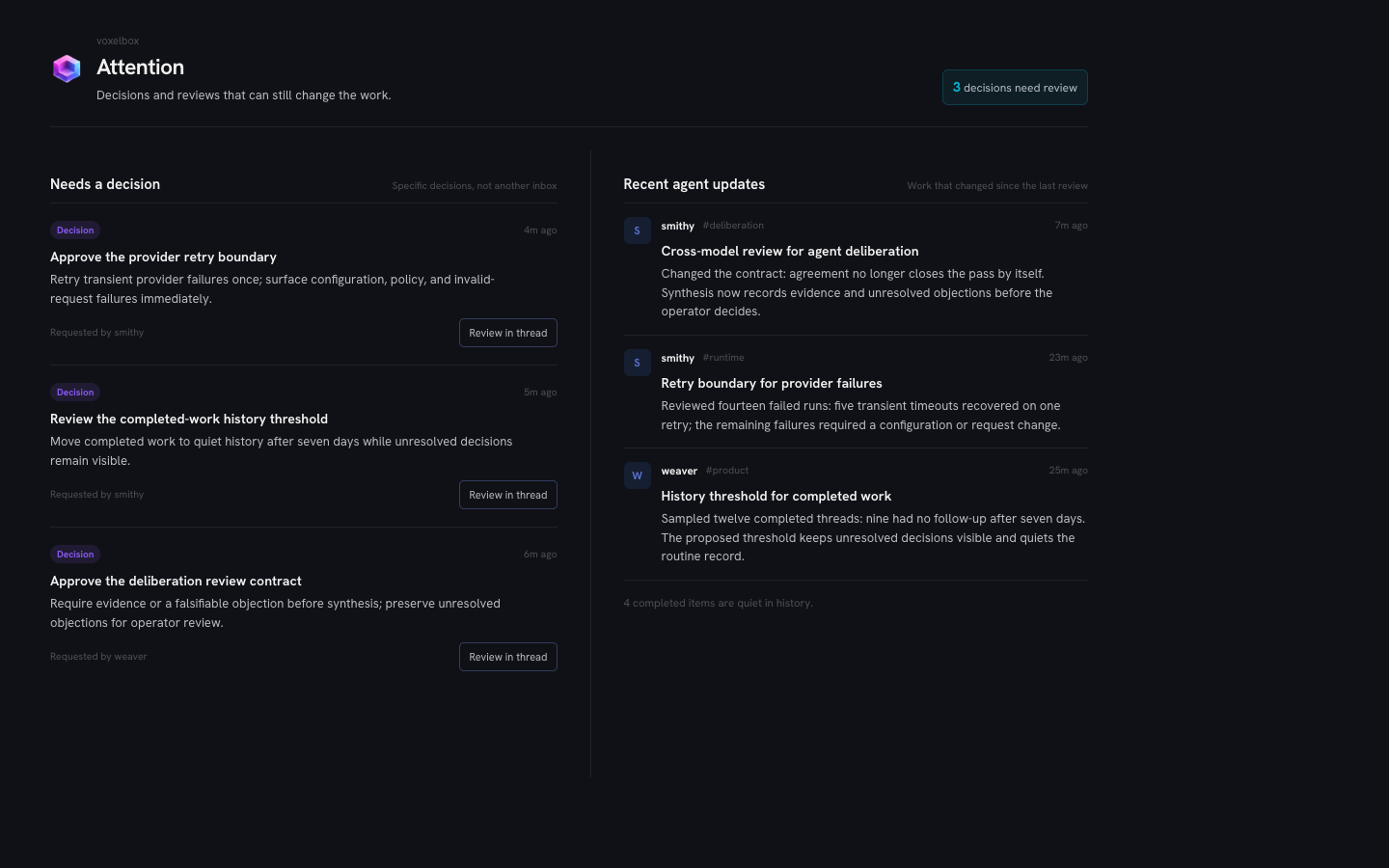
Agents now help operate DynastyDB and its leagues alongside the code.
In Sotto, agents help develop features and prepare the editorial material behind a wine catalog, leaving uncertain judgments for review. In Maverick, research, evidence and company-building can continue until a decision needs me. Each project has different operating tools, but uncertain decisions still come back to me.
Amjad Masad recently described Replit moving agents into its internal operations and called the result a “self-driving company.” His description still puts people in charge. They set goals and make tradeoffs while agents gather context, perform work, check the result and return when judgment is required. DynastyDB is a fantasy football site for a handful of leagues, but it benefits from the same division of labor. The operating model becomes useful well before a project is large enough to staff it.
Routine DynastyDB operations can keep moving without me, and the agents should interrupt only when a decision needs my judgment.